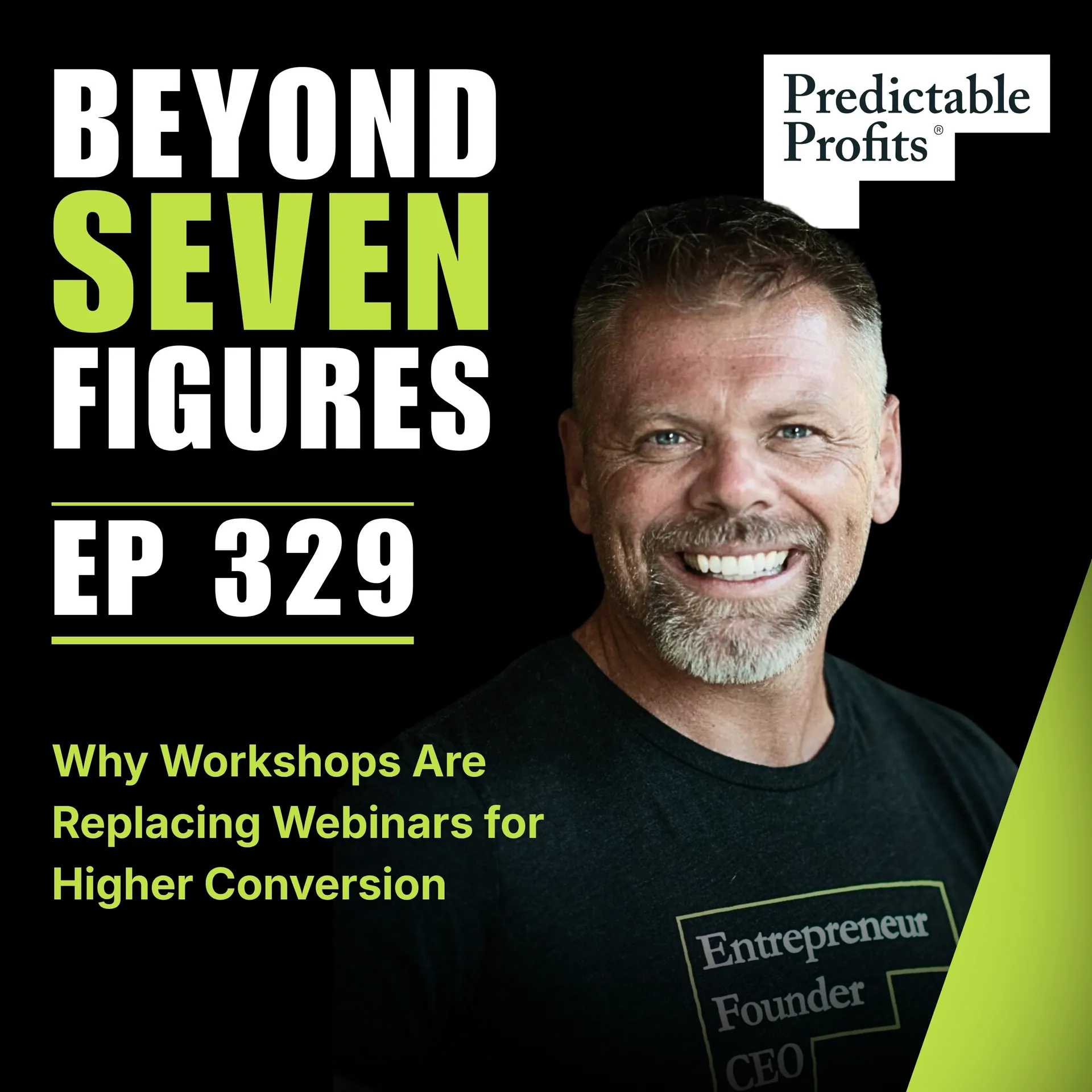
Why Workshops Are Replacing Webinars for Higher Conversion
Webinars dump information. Workshops aim at one outcome and let the buyer do the work, which is why Joe Beecroft, Tom Trush, and I say they create a more qualified pipeline. The campaign starts at registration, when consumption can pre-sell the next step. If leads still fail to become revenue, start with unpredictable revenue.
Joe and Tom are on our team, and this episode is the three of us walking through why the format changed. Joe put the difference plainly. A webinar is often a lecture, camera off, microphone off, more information. A workshop is practical. People implement something and walk out with a result in hand. Tom added that buyers who have money and little time will not sit through an information dump. They need to know there will be an outcome. That also changes who registers. A webinar can attract people who might use the information someday. A workshop is more likely to attract people who already have the problem you are there to solve.
The other half of the shift is how narrow the topic is. I have a habit of over-explaining. Joe pushed us to complete one thing in the time we have, instead of piling on more teaching. When the topic is narrow, attendees are not overwhelmed, and the offer can be a natural next step from the work they just did, not a 20-minute pitch bolted on at the end. We have learned that the hard way, in workshops where the next step was not obvious enough.
I also told the story of how we stumbled into this. After a speaking date in New York, we ran a boardroom session and decided to give people something to do live, a diagnostic of the constraint holding them back. The room lit up. We took that idea digital. Simon Bowen later called that aha moment the magic trick. The point was not more content. It was clarity, in the session, on their own business.
Then we ran a workshop focused on one result, with the same call to action, and it took only a few hours to prepare.
Joe’s rule behind that is simple. Do not invent new IP for the workshop. Pull a small piece of the service you already deliver, solve that smaller problem in the room, and the next step is a natural extension of the work. Become your own best case study. If you tell clients that thought leadership or PR will help the pipeline, you should be doing it yourself.
The workshop itself is only part of the system. Joe said a successful campaign needs a minimum of five to six weeks of runtime, plus a follow-up week if you want it. Getting a registration in week two, then leaving that person alone for four and a half weeks, is not a strategy. Registration is the start of a second campaign. We used the phrase consumption-qualified lead: someone who has consumed enough content to arrive already warm. That is a different job from chasing a close, and it is why the lead generation work has to include a consumption path, not just a signup count.
Tom walked the channels we named: a separate email journey after they register, plus retargeting, plus content that teaches aspects of the same outcome. Opens and clicks are engagement. They are not the same thing as consumption. Do not expect a 100% open rate, even on a registered list, even if that list often opens at a higher rate than the rest of your mail. We also learned this in partner workshops. When we delivered the same workshop, but the first time people consumed anything from us was in the session itself, conversion was lower than when they had consumed beforehand.
Tom’s closing tip was to treat the workshop as a content engine for the next one, especially early on, even if the first room is small. Joe’s cadence suggestion for a B2B service firm was one or two workshops a quarter. I said we run a workshop every six weeks because they work.
If you want a next step, pick one outcome, build the session around implementing that outcome, and start the consumption work the day someone registers. For the mechanics of that path, see how to engineer consumption.
KEY TAKEAWAYS:
- Workshops outperform traditional webinars: they deliver one outcome the attendee implements, instead of a pile of information.
- Narrow the topic: a tighter focus is easier to deliver and easier for attendees to implement.
- Buyers want outcomes, not more information.
- Make the offer a natural next step from the work they just did, ideally a piece of the service you already sell.
- Become your own best case study.
- Consumption creates pre-sold buyers before the session starts.
- The real campaign starts after registration, not when the workshop goes live.
- Build a consumption-qualified lead: someone who has already consumed enough to be ready for the next step.
- Engagement is not always consumption. An open or a click is not the same as having learned enough.
- Use workshops to create more content for the next campaign.
Resources mentioned:
Growing a business is hard, but it doesn’t have to be. In this podcast, we discuss strategies for growing and expanding a business beyond seven figures.
The show mixes practical teaching with expert interviews so you can take ideas back to your company and use them. Enjoy the show.
Please rate, review, and subscribe so you don’t miss future episodes. Your reviews help us improve the show.
Follow Charles Gaudet and Predictable Profits on social media: Facebook: facebook.com/PredictableProfits Instagram: instagram.com/predictableprofits Twitter: twitter.com/charlesgaudet LinkedIn: linkedin.com/in/charlesgaudet Visit: Predictable Profits Predictable Profits Community
FAQ
Why are workshops replacing webinars in this episode?
Because buyer behavior has changed. A workshop is built around one specific outcome the attendee actually implements, not a pile of information. Charles, Joe Beecroft, and Tom Trush say that focus creates a more qualified pipeline.
What is a consumption-qualified lead?
As we used the term on this episode, it is someone who has already consumed enough content, through email, retargeting, and other material before the workshop, that they arrive educated and closer to a next step. That is different from a marketing-qualified or sales-qualified label, and it is different from an email open or a click.
When does the workshop campaign actually start?
At registration, not when the session goes live. Joe said a successful workshop needs a minimum of five to six weeks of runtime, and that leaving a registrant alone until the event and then expecting a close is not enough. The work after they register is a second campaign: content, email, and retargeting so they consume before they show up.
Did you catch our last episode?
So don’t forget to subscribe to the show to get that episode as soon as it is released. Until then, be profitable.

The Predictable Profits Newsletter
Build a More Predictable Pipeline. Close More of the Right Deals.
Get practical lessons each week to help you generate more qualified leads, improve sales conversion, and create consistent growth without relying on heroics or luck.