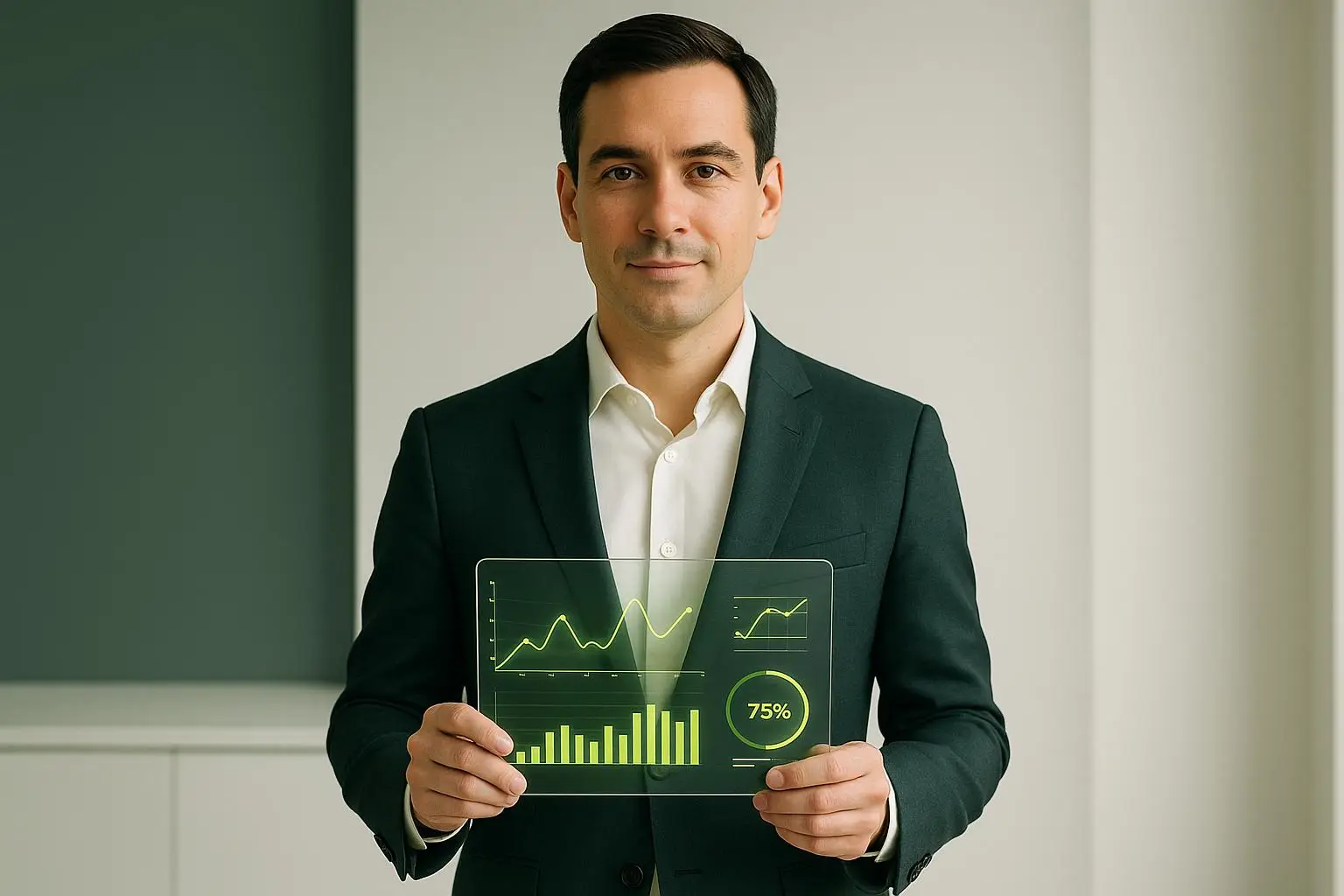
Want to boost sales by 15–25% and outperform competitors by 5.7x? The secret lies in building a data-driven sales culture.
Here’s how data transforms sales:
- Higher Productivity and Profits: Companies using data report 4% higher productivity and 6% higher profits.
- Faster Decision-Making: Real-time analytics helps teams act quickly on opportunities and threats.
- Improved Sales Outcomes: AI-driven lead scoring increases conversion rates by up to 30%.
- Efficient Coaching: Data reveals gaps and strengths, improving team performance by 15–25%.
Key Steps to Get Started:
- Build a strong data infrastructure (e.g., integrate CRMs and automation tools).
- Train your team to use data effectively, boosting productivity by 24%.
- Focus on the right metrics (e.g., pipeline health, conversion rates).
- Use AI for lead scoring, personalization, and funnel optimization.
- Create a culture of continuous improvement with data insights.
Data isn’t just numbers – it’s the key to predictable growth and better sales performance. Start now to build a team that thrives.
Building Your Data-Driven Sales Foundation
If you want your sales team to thrive, you need a solid, data-driven foundation. This means integrating the right tools, training your team to use them, and focusing on the metrics that matter. Here’s why it’s worth the effort: companies with a strong sales foundation are 23 times more likely to acquire customers and 19 times more likely to be profitable. With this groundwork in place, you’ll be ready to leverage advanced analytics and AI for even bigger gains.
Setting Up Your Data Infrastructure
Your sales operation runs on data, so your infrastructure needs to be rock-solid. Start by identifying and connecting key sources like CRMs, email platforms, and automation tools. These systems need to work together seamlessly to give you a clear view of your data. Decide whether to use ETL (Extract, Transform, Load) or ELT (Extract, Load, Transform) based on your needs. ETL is better for stable, structured data, while ELT handles large, ever-changing datasets more effectively.
Data quality is non-negotiable. Implement validation checks, monitor for errors, and establish clear protocols to keep your data clean and reliable. At the same time, make sure your infrastructure is built to scale and secure. Role-based access controls can strike the right balance between security and usability. And if you’re in a regulated industry, address compliance requirements like GDPR or HIPAA from the start.
Teaching Data Skills to Your Sales Teams
Even the best data systems are useless if your team doesn’t know how to use them. That’s why training is critical. In fact, 83% of Chief Data and Analytics Officers have data literacy programs in progress or planned. Start by assessing your team’s current skills. Then, create tailored training tracks that range from basic data awareness to advanced analytics, using real-world sales scenarios.
The payoff? Analytics training can boost sales productivity by 24% and increase quota attainment by 23%. Make it practical – use your team’s actual sales data in training so they can see how the insights apply to their daily work. And don’t treat training as a one-and-done event. Offer ongoing workshops, online courses, and hands-on sessions to keep skills sharp. When your team knows how to use data effectively, they’ll be equipped to turn insights into action.
Choosing and Tracking Key Sales Metrics
The key isn’t tracking more data – it’s tracking the right data. While 84% of sales reps missed their quota last year, teams that focus on the right metrics outperform others by 12% in quota attainment. Use the AIR framework – Activities, Indicators, Results – to zero in on metrics that align with your goals and drive productive behavior.
| Metric Category | Example Metrics | Purpose |
|---|---|---|
| Activities | Monthly calls/emails per rep, new business meetings | Tracks engagement and effort |
| Indicators | Sales forecasting accuracy, stage conversions | Measures pipeline health and process effectiveness |
| Results | Monthly sales growth, opportunity conversion ratio, lead-to-sale conversion rate | Reflects actual outcomes |
Pay special attention to leading indicators. For example, meetings booked can reveal the health of your future pipeline.
Track metrics weekly to avoid micromanagement. The goal isn’t to overwhelm your team but to focus on what drives results. For instance, a rep making fewer calls but achieving a higher conversion rate is often more effective than one who focuses solely on volume.
Context matters. Instead of setting arbitrary quotas, use historical data to show how specific activities lead to business outcomes.
Keep in mind that sales reps spend only 34% of their time actually selling. Use your metrics to pinpoint inefficiencies and streamline processes. When you coach with data instead of policing it, you create a culture of trust and improvement. Companies that embrace data-driven cultures see 25% higher performance and 17% more employee engagement. The result? A team that’s not just more effective, but also more motivated and engaged.
Using Advanced Analytics to Improve Sales Performance
With a solid data foundation in place, it’s time to let advanced analytics do the heavy lifting. These tools go beyond basic reporting. They predict outcomes, reveal hidden patterns, and fine-tune your sales process. Companies that embrace advanced analytics often see tangible boosts in conversion rates, better lead quality, and improved sales efficiency. Let’s break down how these tools supercharge lead qualification and streamline your sales funnel.
Predictive Lead Scoring and Qualification
Traditional lead scoring? It’s often based on gut feelings or basic demographic info. Predictive lead scoring, on the other hand, uses AI to dig deeper. It analyzes customer behaviors, patterns, and preferences across multiple data points to create detailed lead profiles. By assigning scores based on factors like demographic fit, behavioral cues, and intent signals, it even predicts each lead’s lifetime value in real time.
Here’s a real-world example: A mid-sized SaaS company adopted an AI-driven lead scoring system and saw a 30% jump in conversion rates. The AI identified the top 20% of leads as high-value, allowing the sales team to focus their energy where it mattered most. Real-time alerts enabled reps to engage with leads within minutes, significantly boosting response times and engagement.
To make predictive lead scoring work for you, start by defining your Ideal Customer Profile (ICP). Include specifics like industry, company size, job roles, pain points, budget, and buying behaviors. Next, integrate AI tools with your existing systems – your CRM, email marketing platforms, and sales automation tools should talk to each other seamlessly. Train your team to interpret and act on AI insights, combining the technology with human expertise. Finally, keep an eye on your AI models, tweaking them regularly to stay aligned with your business goals.
Sales Funnel Optimization Through Analytics
Predictive scoring is just the beginning. Advanced analytics also help you identify and fix the weak spots in your sales funnel. Every funnel has bottlenecks – those frustrating points where leads drop off or stall. Analytics can pinpoint exactly where and why this happens, and guide you toward the changes that will drive the biggest improvements.
Take these success stories as proof: Brex increased booked demos by 40%, Gorgias saw a 55% rise in qualified deals, Ramp achieved a 70% boost in positive replies, and Northbeam slashed list-building time by 95% – all through strategic funnel optimization.
The key? Systematic analysis. Track how leads interact with each stage of your funnel. Compare the behaviors of high-converting leads to those that drop out, and look for patterns. This insight helps you segment your audience and fine-tune your strategies.
Use A/B testing to figure out what works best, and listen to customer feedback to uncover pain points. Data-driven tweaks might include simplifying navigation with clear calls-to-action, keeping messaging consistent across channels, personalizing content based on user actions, and integrating automated lead scoring into your CRM. By continuously refining your sales funnel, you’ll not only convert more leads but also allocate your resources more effectively. Over time, these adjustments create a sales engine that’s built for sustained growth and performance.
Are you prioritizing the right leads, or are you spreading your efforts too thin? What’s the biggest bottleneck in your sales funnel, and what’s it costing you? How can you better align your team with the insights from advanced analytics?
Here’s the kicker: Analytics don’t just improve performance – they transform how you think about sales. The more you lean into data, the more predictable your growth becomes.
Using AI and Real-Time Analytics for Sales Success
With a solid data foundation in place, integrating AI and real-time analytics can elevate your sales game. These tools don’t just crunch numbers – they guide decisions, streamline tasks, and deliver actionable insights exactly when you need them. Companies leveraging AI have reported revenue growth of 13–15% and a 10–20% boost in sales ROI. It’s a shift that’s redefining sales operations.
AI-Powered Outreach and Personalization
AI has revolutionized how outreach works. By analyzing customer behavior, preferences, and engagement history, it crafts messages that hit home. Nearly 69% of sales professionals say AI enhances their ability to personalize customer interactions, while 70% report higher response rates. Personalized subject lines alone are 26% more likely to be opened. AI doesn’t stop there – it identifies top prospects, predicts the best follow-up timing, and tailors content to individual needs.
“Forget robots taking sales rep jobs! Generative AI is a game-changer for our team. We use it to craft personalized email outreach that grabs attention.”
- Pat Schirripa, CEO of People 2U
This isn’t just theory. A digital marketing agency used generative AI to automate outreach, resulting in a 300% jump in qualified leads and a 25% boost in conversion rates. AI-powered chatbots also play a critical role, engaging prospects 24/7. They qualify leads, answer basic questions, and free up your team to focus on high-value activities.
“By analyzing data on customer preferences and behaviors, AI helps us predict needs, enabling preemptive solution offerings. This not only increases engagement but also positions us as attentive and proactive.”
- Gregory Rozdeba, CEO of Dundas Life
While AI fine-tunes your outreach, real-time dashboards ensure you stay on top of every performance metric that matters.
Real-Time Sales Dashboards for Performance Management
Real-time dashboards are like having a pulse on your sales organization. Instead of waiting for monthly reports, these dashboards update continuously, giving you instant insights into trends and potential problems. Sales teams often drown in data – leads, conversions, customer interactions, revenue figures – but dashboards cut through the noise.
The best dashboards include real-time updates, customizable visualizations, alerts for critical events (like deals at risk or quota milestones), and seamless integration with CRM and other tools. For example, a SaaS company might track subscription renewals and churn in real time, while a retail business could monitor store sales, online orders, and customer engagement metrics. These tools also help you keep an eye on key metrics, like the 3:1 pipeline-to-sales ratio, and take action when things shift.
The real magic? Speed. Sales managers can quickly spot underperforming reps, replicate winning strategies, and adapt to market changes – all without waiting for outdated reports. Mobile-friendly dashboards give field reps the power to track quotas, prioritize tasks, and stay connected to performance metrics on the go.
When designing your dashboard strategy, start with clear goals. What metrics matter most? Keep visualizations simple and make sure your charts tell a clear story. Test layouts with your team and iterate based on their feedback to ensure the dashboards drive fast, informed decisions.
By combining AI-driven personalization with live performance tracking, you’re not just optimizing daily operations – you’re setting the stage for even greater strategic gains. It’s no wonder 78% of sales professionals believe AI allows them to focus on the most critical aspects of their role. The result? Efforts channeled into the right activities at the right time.
Questions to Consider:
- Are you using AI to identify and prioritize your highest-value prospects?
- How could real-time dashboards improve your team’s agility and decision-making?
- What steps can you take today to integrate AI and analytics into your sales strategy?
AI and real-time analytics aren’t just tools – they’re the edge that separates fast-growing companies from the rest. Ignore them, and you’ll be playing catch-up. Embrace them, and you’ll lead the pack.
Building a Culture of Data-Driven Excellence
Sustained sales success isn’t just about having the latest tools – it’s about embedding data into the core of your team’s mindset. When data drives decisions, conversations, and strategies, transformation happens. In fact, companies that embrace a data-driven sales culture are 23% more likely to surpass revenue goals compared to their peers.
This approach thrives on making data both accessible and indispensable. Take Microsoft, for example. In 2012, a simple A/B test led to a 12% revenue boost by year’s end. That’s the power of a test-and-learn culture – small changes, big results.
It all starts at the top. Leadership sets the tone, but when curiosity spreads throughout the organization, the magic begins. Research from the NIH confirms that a culture of curiosity inspires teams to ask sharper questions and dig for evidence-based solutions.
Data-Driven Coaching and Team Development
Traditional sales coaching often relies on instincts and vague observations. Data-driven coaching flips the script. Instead of guessing where reps need improvement, performance analytics reveal exactly what’s working and where the gaps are. Companies using this approach report growth and profitability gains of 15% to 25%.
By combining individual performance metrics with tailored development plans, sales managers can elevate the entire team. They can identify top performers and replicate their habits across the board. Done right, coaching can unlock an 8% boost in sales performance, and 63% of reps say feedback and coaching directly improve their results.
Tools like dashboards, heatmaps, and scorecards make it easy to spot trends and pinpoint areas for improvement during one-on-one meetings. The Corporate Executive Board found that coaching can increase overall team success by as much as 19%.
“We don’t make any decisions without data.” – Stephan Blendstrup, Senior Director of Sales, Zendesk
Focusing on 3–5 key metrics per rep ensures clarity without overwhelming. AI can further enhance coaching by identifying patterns like burnout risks, inconsistent outreach, or pacing issues. When reps see their own analytics and understand their standing, coaching evolves into a collaborative process. It’s no longer about fixing problems – it’s about celebrating wins and reinforcing the right behaviors.
This kind of coaching isn’t just about today’s performance. It builds a foundation for ongoing growth and refinement, driven by data.
Driving Continuous Improvement Through Data Insights
Coaching is just the start. Continuous improvement takes it further by weaving data insights into your team’s daily routine. The most successful organizations don’t treat data analysis as a one-off task – it’s part of their rhythm. They consistently review performance, share best practices, and celebrate wins rooted in data.
Take Southwest Airlines. They use data storytelling to turn customer feedback and operational metrics into actionable insights, improving flight schedules and services. Facebook and Google have built “test-and-learn” cultures where data guides decisions on everything from marketing strategies to product features.
At Google, data literacy training ensures employees across all departments feel confident using data in their daily work. Capital One celebrates analytics wins company-wide, reinforcing a culture that strengthens customer loyalty. Spotify amplifies these efforts through cross-functional collaboration, blending insights from user behavior, marketing trends, and product feedback.
“Building a rich data-centric culture means more than just making more informed decisions: It is about refining your company’s mission and values and encouraging open communication and innovative thinking.” – Sophia Edelstein, Forbes Councils Member
A Harvard Business Review survey of over 360 executives revealed a striking advantage for data and AI leaders. These companies outperformed their peers across critical metrics: operational efficiency (81% vs. 58%), revenue growth (77% vs. 61%), customer loyalty (77% vs. 45%), employee satisfaction (68% vs. 39%), and IT cost predictability (59% vs. 44%).
To keep the momentum going, create open channels for sharing insights and lessons learned. Dashboards and automated reporting, tailored to each team’s needs, ensure data is easy to access without disrupting workflows. Focus on metrics that align with your business goals, so every decision drives impact.
Investing in data literacy and continuous learning doesn’t just improve performance – it also keeps your team engaged. Consider this: 47% of account executives have left sales roles due to a lack of training. Don’t let that be your team.
Conclusion: Transforming Sales Through Data-Driven Strategies
Using analytics, AI-driven outreach, and a commitment to constant improvement can completely change the game in sales. Data-driven strategies lay the groundwork for growth that’s not only scalable but also predictable. Consider this: sales teams with a high-performance culture see 19% higher quota attainment, 22% better win rates, and are three times more likely to be trusted partners by their clients.
Companies that prioritize strong sales cultures outperform their competitors by as much as 202%. The numbers don’t lie – investing in sales analytics pays off, delivering an average ROI of $12.84 for every dollar spent. Over time, these gains multiply. Teams with high accountability boast a 55.2% win rate, compared to just 41.7% for their less accountable counterparts.
Creating this kind of culture doesn’t happen by chance. It requires embedding data into every decision, holding everyone accountable, and fostering a mindset of continuous learning. When data becomes the backbone of decision-making, success follows naturally.
“As a sales leader, you really can create the energy, optimism, and motivation for every single member of your team to bring their best. When you’re doing it right, sales is a team sport. The lone wolf survives, but it’s the pack that thrives.” – Sam Tepper, Korn Ferry
This insight from Sam Tepper highlights the power of leadership in driving transformation. Start by investing in tools like CRM and analytics platforms that empower your team. But don’t stop there – train your salespeople to not just gather numbers but to interpret and act on them. Leadership matters: 75% of top-performing sales teams credit their success to effective leadership. If you want your team to embrace a data-driven approach, lead the way.
Data-driven sales strategies don’t replace human connection – they enhance it. Companies using these strategies report above-market growth and EBITDA gains between 15% and 25%. This is about combining the art of building relationships with the science of analytics. Together, they create a sales engine that not only weathers market shifts but thrives because of them.
The first step? Commit to letting data guide your strategy. When you marry relationship-building with data intelligence, you create a sales team that doesn’t just survive – it dominates.
FAQs
What steps should a company take to create a data-driven sales culture?
To create a sales culture rooted in data, start by encouraging your team to embrace decisions grounded in hard facts. This isn’t just about numbers – it’s about making smarter, more informed choices. Equip your team with the training they need to interpret and apply data insights in their day-to-day work. Then, make sure the data isn’t locked away in silos. Use a strong Customer Relationship Management (CRM) system to centralize everything – customer behavior, sales performance, and other key metrics – all in one place. When data is easy to access, it becomes easier to act on.
From there, focus on setting clear, measurable goals that tie directly to data-driven strategies. Goals should be more than just targets – they should inspire action and improvement. Build a culture where trying new approaches, analyzing results, and tweaking strategies is the norm. Openly share progress and outcomes with the team. This transparency not only aligns everyone with the company’s larger objectives but also fuels consistent revenue growth and strengthens team performance.
How can AI improve sales performance, and what steps are needed to integrate it into existing processes?
AI has the power to supercharge your sales team by offering actionable insights and taking over tedious, repetitive tasks. It sharpens forecasting accuracy, highlights high-value accounts, refines sales territory management, and simplifies quota planning. By equipping your team with smarter tools and improving customer interactions, AI unlocks new levels of efficiency and effectiveness.
To weave AI into your sales strategy, start with predictive analytics to anticipate trends and opportunities. Make sure your data is clean, well-organized, and ready for analysis. Choose tools that align with your team’s workflows and goals. Equip your team with the training they need to embrace AI-driven systems and foster collaboration throughout the transition. Stay ahead of potential pitfalls like bias or data privacy concerns by addressing them head-on. This proactive approach ensures you get the most out of AI while maintaining trust and compliance.
What key sales metrics should I track to boost team performance and increase conversion rates?
To boost your team’s performance and increase conversion rates, keep a close eye on these critical sales metrics:
- Conversion rate: This tells you the percentage of leads that become paying customers. It’s a direct measure of how well your sales process is working.
- Win rate: This is the ratio of deals closed compared to total opportunities. It highlights your team’s ability to hit their targets.
- Average deal size: Knowing the average revenue per deal can reveal patterns and point to areas where you can grow.
- Lead response time: Quick responses to leads often mean stronger relationships and higher chances of closing the deal. Speed matters.
By consistently tracking these numbers, you’ll uncover weak spots, sharpen your strategies, and give your team the focused coaching they need to push revenue higher.
Related Blog Posts
- Using OMG’s Sales Team Evaluations to Drive Revenue Growth
- Tailoring Sales Training Programs Based on Assessment Results
- Developing a Culture of Coaching: Strategies for Sales Leaders
- Aligning Sales Processes with Assessment Insights for Optimal Performance
The Predictable Profits Newsletter
Build a More Predictable Pipeline. Close More of the Right Deals.
Get practical lessons each week to help you generate more qualified leads, improve sales conversion, and create consistent growth without relying on heroics or luck.