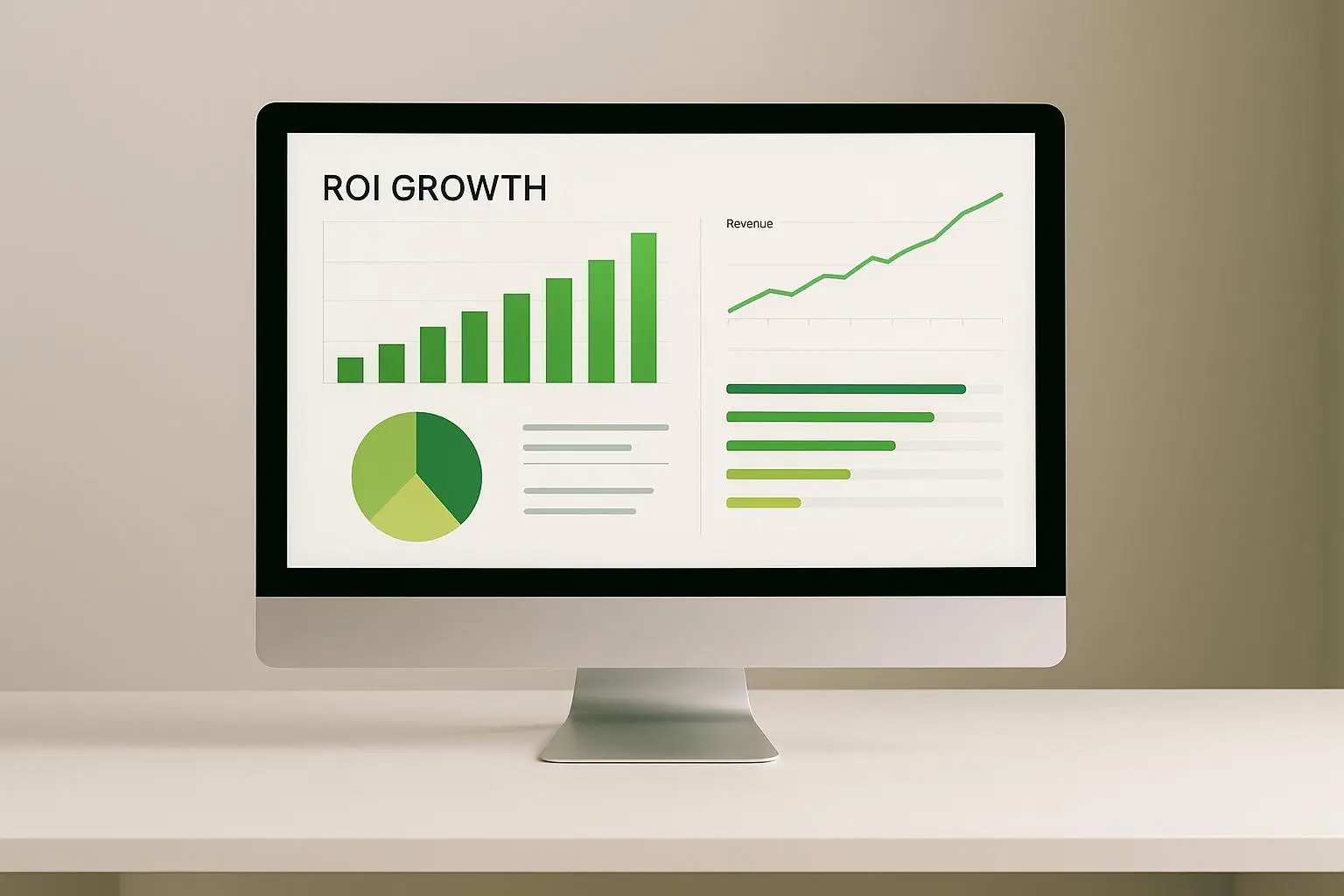
Predictive analytics can transform how businesses retain customers. Instead of reacting to churn, it helps predict and prevent it. By analyzing customer data – like engagement, usage, and payment trends – you can identify at-risk customers early and take action to keep them. This approach boosts retention rates, increases customer lifetime value, and stabilizes revenue.
Key Takeaways:
- Retention is cheaper than acquisition: Keeping a customer costs 5x less than acquiring a new one.
- Small retention gains = big profits: A 5% increase in retention can boost profits by 25%–95%.
- Predictive analytics works: It identifies churn risks weeks in advance and helps deploy targeted interventions.
- High renewal rates drive growth: SaaS businesses with >90% renewal rates outperform their peers.
Predictive analytics isn’t just about data – it’s about turning insights into action. Companies like Netflix and others use it to personalize experiences, improve satisfaction, and achieve retention rates as high as 93%. Are you ready to use predictive analytics to secure your competitive edge?
Understanding Renewal Metrics and Business Impact
What Are Renewal Rates?
Renewal rates measure how many customers decide to stick with your service when their subscription term ends. It’s a direct reflection of how much value they see in your offering. The calculation is straightforward: divide the number of customers who renewed by the total number of customers eligible for renewal, then multiply by 100. But there’s more than one way to look at this metric, and each approach tells a different story.
- Customer Renewal Rate: This focuses on the number of customers. Say 100 customers are up for renewal, and 90 renew – your customer renewal rate is 90%. This metric highlights individual loyalty and satisfaction.
- Revenue Renewal Rate: This digs deeper by analyzing the dollar value of renewed contracts. For instance, losing a large client while retaining smaller ones might not show up in customer renewal rates but could dramatically affect revenue renewal rates.
- MRR Renewal Rate: This tracks the retention of monthly recurring revenue (MRR). If $10,000 in MRR is due for renewal and you retain $8,000, your MRR renewal rate is 80%. It’s a critical metric for recurring revenue businesses.
| Renewal Rate Type | Formula | Description |
|---|---|---|
| Customer Renewal Rate | (Number of Customers Who Renewed / Number of Customers Up for Renewal) × 100 | Tracks customer loyalty and retention |
| Revenue Renewal Rate | (Value of Contracts Renewed / Value of Contracts Up for Renewal) × 100 | Measures revenue retention from renewals |
| MRR Renewal Rate | (Renewed MRR / Total MRR Eligible for Renewal) × 100 | Focuses on monthly recurring revenue retention |
Unlike retention rates, which count all continuing customers, renewal rates specifically track those who actively choose to renew.
Why Renewal Rates Matter
Renewal rates are a window into your business’s health. They reveal how well you’re delivering value to your customers. High renewal rates mean satisfied customers, a solid product-market fit, and a foundation for sustainable growth.
“Your customer renewal rate is the best indicator of overall customer satisfaction.” – Dave Kellogg
Here’s why renewal rates are so impactful:
- Profitability: A 5% increase in retention can boost profits by 25% to 95%. Retained customers tend to spend more over time, need less support, and often become your best advocates.
- Revenue Predictability: High renewal rates make revenue forecasts more reliable. That stability helps you make smarter decisions about hiring, product development, and marketing.
- Customer Lifetime Value (CLTV): Customers who renew year after year are exponentially more valuable than those who churn early. High renewal rates drive up overall CLTV, which is the lifeblood of long-term growth.
- Cash Flow Stability: For agencies, steady renewals mean predictable cash flow. This allows you to plan team capacity, invest in growth, and avoid the constant scramble to replace lost revenue.
Benchmarks for Healthy Renewal Rates
Knowing how your renewal rates stack up against industry benchmarks can help you gauge performance. For SaaS businesses, a renewal rate above 90% is excellent, while anything over 80% is generally strong for subscription models.
The average Net Revenue Retention (NRR) benchmark for SaaS companies is 102%. This means customers aren’t just renewing – they’re spending more through upsells and cross-sells, adding to your bottom line without requiring new customer acquisition.
Billing frequency also plays a role in renewal rates. For example:
- Weekly subscriptions average 73%.
- Monthly subscriptions average 64%.
- Annual subscriptions can drop to 25%.
These numbers highlight how contract length and billing cadence can influence customer commitment.
Several factors shape your renewal rates:
- Product Quality: If your service doesn’t consistently deliver, renewals will suffer.
- Pricing Strategy: Customers need to see clear ROI to justify renewing.
- Customer Service: Exceptional support can make or break renewal decisions.
- Economic Conditions: Broader market trends can influence customer behavior.
- Contract Terms: Longer agreements with incentives for early renewal can improve rates.
“Benchmarking improves performance by identifying and applying best-demonstrated practices to operations and sales.” – Bain & Company
Tracking your renewal rates over time is just as important as hitting benchmarks. An upward trend shows your strategies are resonating. Consistently low rates (e.g., below 80%)? That’s a red flag. It could point to issues with your product, pricing, or customer experience. For agencies managing multiple clients, these metrics can help pinpoint which services or clients are driving profitability – and which might need a closer look.
Renewal rates aren’t just numbers. They’re a compass for navigating growth, stability, and long-term success.
How Predictive Analytics Improves Renewal Strategies
Predictive analytics is reshaping how businesses tackle customer retention. It turns raw data into actionable insights, allowing companies to spot potential churn risks early and take proactive steps to keep customers on board.
At its core, predictive analytics is about forecasting behavior. By analyzing patterns in customer interactions – like digital activity or engagement trends – businesses can accurately anticipate what’s coming next. This isn’t guesswork; it’s data-driven strategy. And when done right, it lays the groundwork for retention plans that are both precise and effective.
Key Data Points for Predictive Models
The accuracy of any predictive model hinges on the quality of its inputs. The best models pull from a variety of data sources to paint a clear picture of customer health. These sources often include:
- Customer demographics
- Purchase history
- Website behavior
- Social media activity
- Customer service interactions
One of the most telling indicators? Declining feature usage. Studies reveal that analyzing usage patterns can predict satisfaction levels with an accuracy of up to 87%. Even more impressive, shifts in engagement often appear weeks before a customer officially churns.
| Data Source | Prediction Accuracy | Early Warning Window |
|---|---|---|
| Feature Usage Patterns | Up to 87% | 6–8 weeks |
| Engagement Metrics | High accuracy | Weeks before churn |
Using AI and Machine Learning for Renewal Predictions
Once the data is collected, AI and machine learning take it to the next level. These advanced tools dig deep into usage, payment, and engagement patterns, uncovering subtle trends that humans might miss. For instance, N-iX used machine learning to help an ecommerce platform calculate the likelihood of subscription churn. Armed with these insights, the platform created personalized email campaigns that boosted retention rates.
The beauty of machine learning lies in its adaptability. As customer behavior evolves, the models recalibrate, ensuring predictions stay accurate and relevant.
Benefits of Predictive Renewal Management
The payoff for using predictive analytics in renewals is undeniable. Businesses often see a 15–25% drop in churn rates and a 20–30% increase in customer lifetime value. Early detection of at-risk accounts – often 6–8 weeks before churn – allows teams to act swiftly with targeted interventions.
The financial implications are equally compelling. Retaining a customer is far more cost-effective than acquiring a new one. Studies show it costs five times more to land a new customer, and the likelihood of selling to an existing customer is 60–70%, compared to just 20% for a new prospect. Companies like The Willow Tree Boutique and Ministry of Supply have reported significant revenue growth by leveraging predictive models.
“Predictive analytics enables businesses to go beyond reactive problem-solving by delivering proactive, tailored support.” – Lumenalta
With these tools, businesses can craft personalized retention strategies. For example, customers with declining feature usage might benefit from training sessions, while those with payment delays could respond well to flexible billing options. Beyond retention, predictive analytics enhances revenue forecasting, cash flow management, and capacity planning. The result? Better renewal rates, increased customer lifetime value, and a more predictable growth trajectory.
Questions to Ponder:
- Are you leveraging all available customer data to predict churn risks effectively?
- What personalized strategies could you implement to address different churn triggers?
- How can you integrate predictive analytics into your broader growth strategy?
The businesses that master predictive analytics don’t just retain customers – they dominate their markets. The question is: Are you ready to be one of them?
Building a Systematic Renewal Framework
Turning predictive insights into action is where the magic happens. A systematic renewal framework ensures your data-driven insights translate into predictable results. The goal? Create a machine that runs smoothly, without constant hand-holding. This means clear processes, defined roles, and embedding predictive tools into your team’s daily operations.
The best businesses don’t leave renewals to luck. They build systems that automatically spot at-risk customers, trigger tailored interventions, and track outcomes. This approach doesn’t just save time – it lets your team focus on high-value activities instead of scrambling to put out fires. By linking predictive insights with daily routines, you make every action timely and effective.
Designing Tiered Retention Strategies
Not all customers are the same, so why treat them that way? A winning retention strategy starts with segmenting customers based on their risk of churn and tailoring your approach for each group.
First, pinpoint the warning signs – things like reduced logins, delayed payments, or declining feature usage. Then, divide your customers into three risk tiers: low, medium, and high. Each tier gets a strategy that matches its needs.
- Low-risk customers: Keep them engaged by introducing advanced features they haven’t tried or sharing stories of how others have succeeded. The goal is to deepen their connection before issues arise.
- Medium-risk customers: These folks need more attention. If they’re only using basic features, offer targeted training or show them tools that align with their goals. Even a quick phone call to understand their challenges can make all the difference.
- High-risk customers: Act fast. Offer plans that better fit their needs, provide hands-on support for complex issues, or create custom solutions to address their pain points.
Take The Willow Tree Boutique as an example. They used predictive analytics to identify high-value customers, driving significant revenue growth. Similarly, Every Man Jack anticipates reorder timing with predictive tools, generating 12.4% of their total attributed revenue through targeted campaigns.
Establishing Clear Accountability and Ownership
One of the biggest traps in renewal systems is a lack of ownership. When everyone assumes someone else is handling it, things slip through the cracks. The solution? Assign clear roles and responsibilities.
Break down your renewal process and assign ownership to specific tasks. One person monitors dashboards, another handles outreach, and a third manages high-risk accounts. Document these roles so there’s no confusion.
For instance, R&G Technologies ties employee KPIs to rapid response times and service-level agreements. They even use customer surveys to proactively catch churn signals. This level of accountability ensures no task gets overlooked.
It’s also critical to have a playbook for when customers move between risk tiers. A clear, step-by-step process ensures no action is missed, even during busy periods.
“Accountability on both sides is key to long-term partnerships and renewal growth.” – Janelle Pierini, GTM Leader, Demandbase
When everyone knows their role and the steps are locked in, your system can handle anything – even during crunch time or staff shortages.
Integrating Predictive Tools into Daily Workflows
Predictive tools only work if they’re part of your team’s everyday routine. If they sit on the sidelines, they’re useless. The key is weaving them into your workflows so they trigger actions automatically.
Set up systems that act on behavioral signals. For example, if a customer’s usage drops, send a personalized email highlighting unused features. If engagement dips or a cart is abandoned, trigger a timely follow-up.
Netflix nails this. Their predictive analytics analyze viewing habits to deliver spot-on recommendations, helping them achieve a 93% retention rate.
Make sure your team has easy-to-use dashboards. Whether it’s risk scores in your CRM for sales or engagement trends for customer success, the tools should fit naturally into their day.
Behavioral triggers are another must. Use them to engage at-risk customers at key points – like before a renewal date or after a period of inactivity. These interventions should feel timely and helpful, not forced.
“I trust and value Klaviyo AI because it saves me time, it helps me leverage our customer data to personalize our email timing and strategies. Most importantly, I maintain complete control over how and when it’s used.” – Troy Petrunoff, Senior Retention Marketing Manager, Every Man Jack
By seamlessly integrating predictive insights, your team can act fast and with precision, driving better outcomes without adding complexity.
At Predictable Profits, we know that building a systematic renewal framework is a game-changer for scaling your business. It’s not just about managing renewals – it’s about creating a foundation for sustainable growth. With this structure in place, the next step is measuring success and refining your approach.
Measuring Success and Optimizing Renewal Processes
Building a renewal framework is just the beginning. The real magic happens when you track the right metrics and refine your approach based on what the data reveals. Success in predictive renewal management depends on creating a feedback loop that adapts as new insights emerge.
KPIs for Renewal Performance
Metrics are the backbone of renewal success. But not all metrics are created equal. Focus on those that directly tie to revenue and customer behavior – skip the ones that look impressive but don’t drive decisions.
- Renewal Rate: This shows the percentage of customers sticking with their subscriptions. Regular tracking helps you identify trends early, so you can act before small issues snowball.
- Customer Churn Rate: This measures how many customers leave during a given period. Even minor improvements here have an outsized impact. A 5% boost in retention can increase revenue by 25% to 95%.
- Net Revenue Retention (NRR): NRR captures more than renewals – it includes expansion revenue, showing if your current customers are spending more over time.
- Customer Lifetime Value (CLTV): This metric estimates the total revenue from a customer relationship. Predictive analytics can help extend customer lifespans and increase spending. In fact, 25% of marketers rank CLTV as a top metric to track.
- Customer Satisfaction Score (CSAT) and Customer Engagement Score: These are your early warning systems. A 20% boost in satisfaction often leads to a 15–20% increase in cross-sell rates.
These metrics don’t operate in silos. A dip in engagement can signal a drop in satisfaction, which often leads to churn. Predictive models connect these dots early, giving you time to act.
Real-world examples highlight the power of this approach. A global food and beverage company used predictive analytics to flag at-risk customers, successfully predicting 85% of likely cancellations. As a result, they cut overall churn by over 11%, including a 20% reduction among VIP customers.
Refining Predictive Models Over Time
Once your KPIs are clear, the work isn’t over. Predictive models need ongoing updates to stay accurate. Customer behaviors and market conditions shift, and what worked six months ago might not work today. Regularly monitor model performance and retrain with fresh data when prediction accuracy dips.
Take this example: A multinational software company analyzed five years of renewal data and found that frequent support interactions and flexible pricing were key predictors of renewals. By restructuring their process around these insights, they boosted their renewal rate by 18% in a single year.
As new data sources emerge – like customer support tickets, usage logs, or payment histories – integrate them into your models. The goal is to make your system smarter with every customer interaction.
Scaling Renewal Systems for Growth
Refining your models and tracking metrics lays the groundwork for scaling. But growth brings its own set of challenges. What works for 1,000 customers might crumble under the weight of 10,000. Scaling requires systems that maintain their effectiveness as volume increases.
- Scalable Infrastructure: Cloud-based solutions that adjust to demand spikes are a must. Companies using analytics-driven strategies see productivity rise by up to 6% annually and profits grow by 7%.
- Automation: Manual outreach has its limits. Automated workflows triggered by predictive signals – like a drop in engagement – allow you to personalize outreach at scale.
- Customer Segmentation: Group customers by behavior, value, or risk to deliver tailored experiences efficiently. Segmented campaigns can boost engagement by 30%.
- Real-Time Dashboards: Instant visibility into customer health and system performance keeps teams aligned. Companies using real-time analytics report a 15% jump in customer satisfaction scores.
Scaling isn’t just about technology. It’s about people too. Teams with data specialists are five times more likely to make data-driven decisions than those without. Equip your team to interpret and act on predictive insights.
Organizations that consistently refine their models see prediction accuracy improve by up to 40% over time. This creates a compounding effect – better predictions lead to higher renewal rates, which generate more data for further improvements.
The payoff is huge. Companies leveraging predictive insights for retention see a 30% boost in customer lifetime value. The ultimate goal? Systems that don’t just handle growth but accelerate it by keeping your best customers longer.
At Predictable Profits, we’ve seen agency owners transform their businesses by focusing on metrics, refining their models, and building scalable systems. The formula is simple: track what matters, improve continuously, and prepare to grow without limits.
What would happen if you doubled down on customer retention? How much revenue are you leaving on the table by ignoring churn signals? What’s your plan to scale renewal systems as you grow?
Here’s the truth: retention isn’t just a strategy – it’s your secret weapon for compounding growth. Don’t just measure success. Redefine it.
Conclusion: Transforming Retention with Predictive Analytics
Companies using predictive analytics aren’t just holding their ground – they’re pulling ahead. B2B companies leveraging Salesforce’s predictive tools, for example, report better retention rates and stronger lead conversions.
This isn’t about guessing anymore. It’s about anticipating churn before it happens. Every interaction, support ticket, and usage pattern becomes a data point feeding your predictive model. The businesses dominating today know retention isn’t random – it’s the result of intentional systems that turn raw data into actionable insights.
The proof is in the numbers. Hydrant saw a 260% boost in conversion rates for targeted winback campaigns, while SciPlay increased their average revenue per user by 11-30% among loyal players.
The gap is real. While 60% of global managers admit their KPIs are falling short, only 34% have invested in advanced analytics. But here’s the kicker – 90% of those who did report measurable improvements in efficiency and financial performance.
The leaders in this space have moved beyond spreadsheets and gut feelings. They’re deploying customer journey mapping, behavioral triggers, and lifecycle segmentation to build retention campaigns that scale. And they’re not just keeping customers – they’re growing lifetime value with cross-sell and upsell opportunities uncovered by predictive models.
Winning with predictive analytics isn’t complicated, but it does require a framework. You need to collect the right data, choose the right tools, define clear metrics, automate insights, and refine continuously. It’s all backed by a culture where every team member understands that retention isn’t just a metric – it’s the foundation of growth.
At Predictable Profits, we’ve seen agency owners completely transform their businesses by adopting these structured approaches. The ones who scale don’t rely on endless hustle – they build repeatable, scalable systems that free them to grow.
So here’s the real question: Will you be the one leading this transformation, or will you be left trying to catch up? Your customers are sending signals right now. Acting on them could define your competitive edge.
Start building your predictive renewal system today – and watch your bottom line grow.
FAQs
How does predictive analytics help boost customer retention and renewal rates?
Predictive analytics empowers businesses to keep customers longer and boost renewal rates by anticipating their behaviors and needs. By diving into past interactions, purchase trends, and engagement data, companies can pinpoint customers who might leave and take action before it’s too late – whether that’s offering a personalized deal or stepping in with timely support.
Some winning strategies include grouping customers by their risk of leaving, predicting renewal opportunities, and customizing outreach based on individual preferences. These tactics don’t just keep customers happy – they also stabilize revenue and build stronger, lasting relationships.
What key data should businesses analyze to predict and prevent customer churn?
To keep customer churn in check, zero in on the data that matters most. Start with engagement trends – a noticeable drop in app usage or fewer email responses can be early warning signs. Next, track purchase frequency; when buying habits slow down, it often points to dissatisfaction. Don’t forget payment history – missed payments or billing hiccups can signal deeper issues brewing.
Dive into customer satisfaction by leveraging surveys and feedback. These tools can uncover unhappiness before it spirals. Finally, study behavioral patterns and lifetime value to spot customers who might be slipping away. Armed with this data, you can step in with targeted actions to rebuild trust and loyalty. Proactive moves here don’t just prevent churn – they strengthen relationships and keep customers coming back.
How can predictive analytics help businesses improve renewal rates and streamline operations?
Predictive analytics gives businesses the power to spot customers who might be on the verge of leaving and take action before it’s too late. By digging into historical data and uncovering behavioral patterns, these tools help you understand what’s really going on with your customers. This means you can tackle issues early, keep satisfaction levels high, and lock in better retention rates.
But it doesn’t stop there. Predictive analytics also sharpens how you run your business. It helps you make smarter decisions and allocate resources where they’ll have the biggest impact. You can stay ahead of trends, fine-tune workflows, and zero in on what truly moves the needle. The payoff? A leaner operation, lower costs, and growth that’s steady and reliable.
Related Blog Posts
- How To Build A Customer Success System For Churn Reduction
- Client Retention Data: Systems That Increase LTV for Agencies
- Predictive Analytics for Recurring Revenue Growth
- Retention Analytics Tools for B2B Agencies
The Predictable Profits Newsletter
Build a More Predictable Pipeline. Close More of the Right Deals.
Get practical lessons each week to help you generate more qualified leads, improve sales conversion, and create consistent growth without relying on heroics or luck.