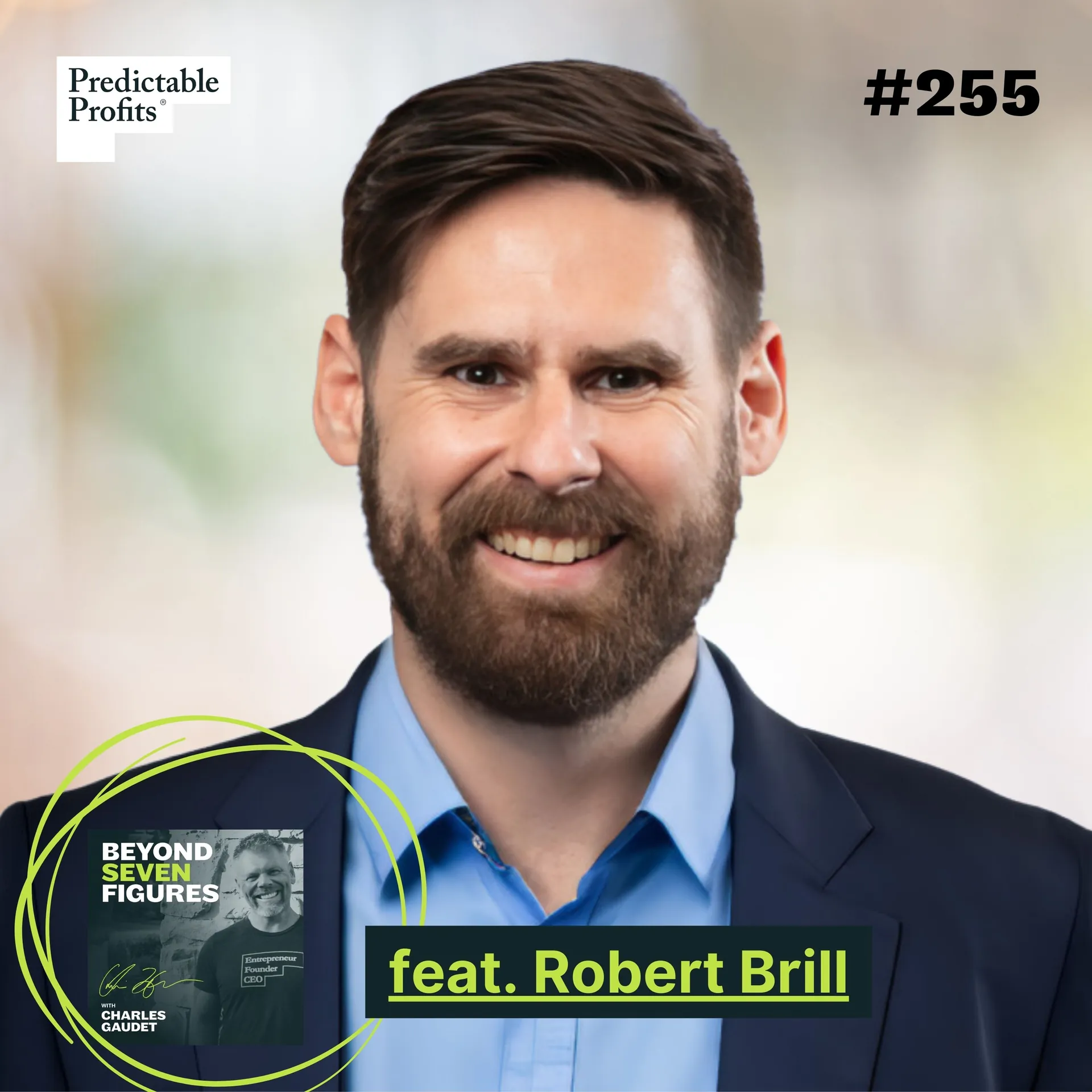
Episode 255: The Key to Eliminating Guesswork in Advertising ft. Robert Brill
Guessing at ads is expensive. Robert Brill and I talk about ending that guesswork by matching the message to a real customer pain, then testing what actually works. If the company still depends on you, start with the Founder’s Trap.
Robert is the CEO of Brill Media, a media-buying agency. This is a December 2024 conversation, not a current media-buying audit. The method still holds: do not bet the budget on a line you have not tested, and do not write generic claims that could apply to anyone.
The first job is the pain. If the message does not name a problem the buyer already feels, you end up competing on price. Robert uses what he calls dog-whistle language: specific wording the right audience recognizes, and others may miss. That is how you aim the ad at the market you actually want, instead of trying to be interesting to everyone.
Then you test. Not one element once, and not a single favorite testimonial. Robert’s point on testimonials is that praise is not enough. The useful one handles a doubt the next buyer actually has. The most impressive story is not always the one that works. You find out by testing, the same way you test the rest of the message.
If you want a concrete move from this episode, write the doubt your best prospects still have after they like you, and find a testimonial or a line that answers that doubt. Then run it against the line you were going to use anyway. Demand gets clearer when the message is specific.
KEY TAKEAWAYS:
- This is a December 2024 conversation, not a current media-buying audit.
- Generic claims force you to compete on price. Specific pain does not.
- “Dog whistle” language is wording the right audience recognizes and others may miss.
- Test more than one element. Do not bet the budget on an untested line.
- A useful testimonial handles a real doubt, not just praise.
- The most impressive story is not always the one that converts. Test it.
- Align the message with the market, then let the tests decide.
Connect with Robert Brill:
- Website named in the official notes, and pointed to on the episode: Brill Media
- Sprint test page: Brill Media sprint test
Learn more about Predictable Profits and the Predictable Profits Community.
Growing a business is hard, but it doesn’t have to be. In this podcast, we discuss strategies for growing and expanding a business beyond seven figures.
The show mixes practical teaching with expert interviews so you can take ideas back to your company and use them. Enjoy the show.
Please rate, review, and subscribe so you don’t miss future episodes. Your reviews help us improve the show.
Follow Charles Gaudet and Predictable Profits on social media: Facebook: facebook.com/PredictableProfits Instagram: instagram.com/predictableprofits Twitter: twitter.com/charlesgaudet LinkedIn: linkedin.com/in/charlesgaudet Visit: Predictable Profits Predictable Profits Community
FAQ
How do you eliminate guesswork in advertising, according to this episode?
Align the message with a real customer pain, then test the elements instead of betting on a single untested line. That is Charles and Robert Brill’s method in this December 2024 conversation.
What makes a testimonial useful here?
A strong testimonial handles a doubt the next buyer actually has, not just praise. Robert’s point is that you should test testimonials the same way you test the rest of the message, because the impressive story is not always the one that converts.
What is “dog whistle” language in this conversation?
Robert uses it for specific wording the right audience recognizes, and others may miss. It is how you aim a message at the market you actually want, rather than writing generic claims that could apply to anyone.
Did you catch our last episode?
So don’t forget to subscribe to the show to get that episode as soon as it is released. Until then, be profitable.