Case Study · Code Conspirators
How Rob Riggs Built the Systems to Grow His Agency Beyond Himself.
Rob Riggs started Code Conspirators in 2009, and it began the way most do — as a side hustle built on passion.
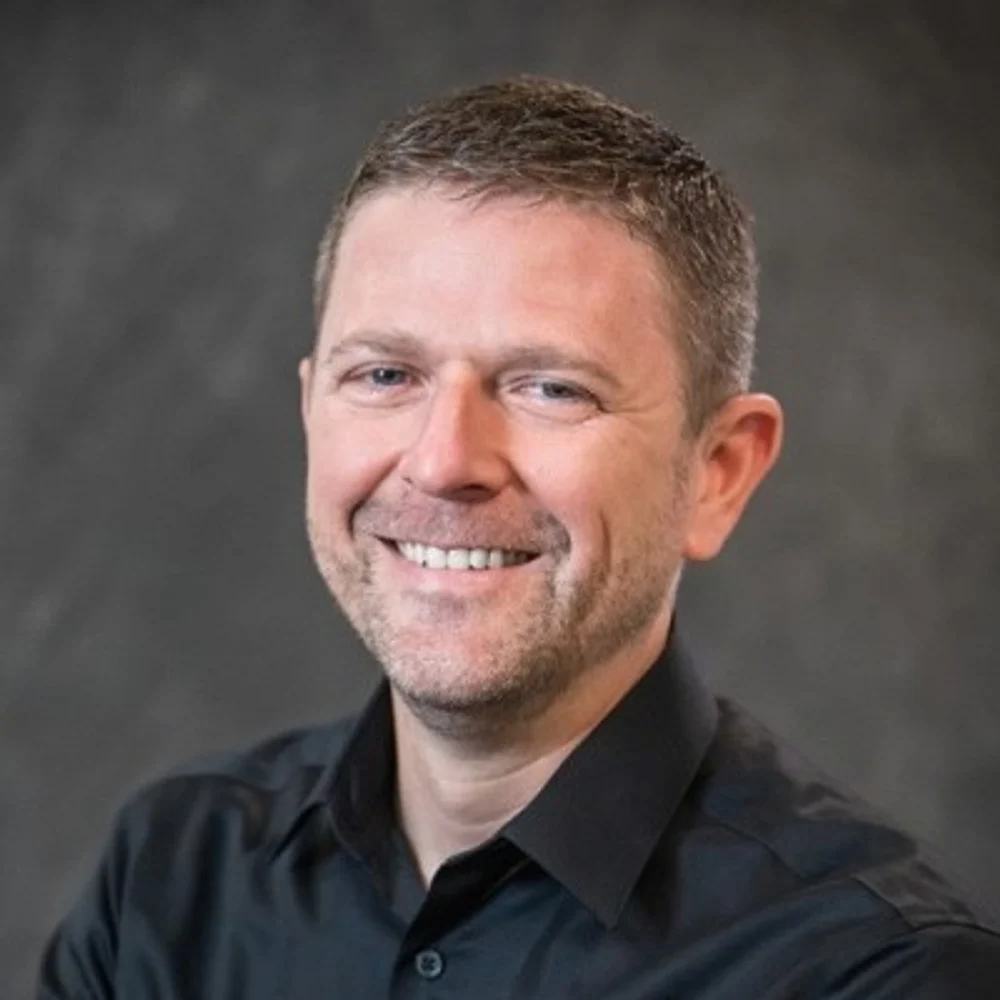
In His Own Words
Hear Rob tell it.
He saw a gap in the market. The big digital marketing agencies ignored small businesses, and freelancers lacked the expertise to make a meaningful impact.
Rob figured he could do better. So he started helping businesses in his network, one project at a time.
Revenue grew gradually. Then, when the agency income passed what he was making in his corporate role, he made the leap and went full time.
But continued growth brought problems he didn't anticipate.
The cost of doing everything.
For years, Rob was the agency. He was the strategist, salesperson and project manager. When necessary, he was also the one writing code at 2 a.m. to make a deadline.
He built a team of overseas freelancers. However, the timezone differences created late nights, and quality gaps meant he was still the one catching everything that slipped through the cracks.
"There just were not enough hours in the day to do it all. I was pulling several all-nighters a year."
The turning point came when he finally admitted he couldn't continue such a hectic schedule. So he made his first strategic hire — someone local who could sit across from him and be held accountable.
This led to another hire. Then a third, who he promoted to project manager.
Each hire freed him up to sell more, which funded the next hire.
By 2017, the team had grown to six people. For the first time, the agency crossed seven figures in revenue.
The achievement felt monumental. But Rob knew scaling without him still being responsible for everything remained the biggest hurdle.
Bigger revenue brings bigger questions.
On paper, 2024 was the agency's highest revenue year ever. However, when Rob looked at the bottom line, the picture wasn't all positive. Top-line growth didn't bring profit growth. Then a major project ended and that revenue disappeared without a reliable engine to replace it.
"That's when I started to realize that top line is not worth chasing if it's not growing the bottom line."
He knew he needed an outside perspective. He'd followed Charles Gaudet's content for years through various business communities. So when a free workshop came up, he jumped in.
What happened during that training stuck with him.
Using a simple Google Sheet, Charles walked Rob and a small group of other founders through a self-assessment, rating their business across a handful of key categories. Then came the reveal.
"He had my revenue numbers and my biggest issues and challenges pegged. It was like a magic trick. I was like a 4-year-old and Charles was pulling the bunny out of the hat."
The logic was simple: If Predictable Profits understood his problems that well, they probably understood how to solve them.
Rob signed up for the Board of Directors.
The dashboard Rob didn't know he needed.
Rob describes himself as "a sucker for a dashboard." Yet he never had the language to know what to track. This changed with the CEO Scorecard.
At first glance, it looked like just another spreadsheet. But for Rob, the CEO Scorecard became the foundation for how he runs his agency. Month over month, he could see his goals and measure his progress against them.
More importantly, he now understood what levers to pull when something drifted off track.
"I arrived at metrics that my team also needed to be accountable to in order to hit my numbers."
From there, he didn't stop at the CEO level. Rob built out scorecards for each of his senior roles, so he could track project KPIs for web and retainer work.
Then he went further, creating accountability metrics for his SDR: LinkedIn activity, connections, podcast downloads, how sales calls were being scored, what outreach looked like, etc.
"Those KPIs are making a tremendous difference in the predictability of how we grow."
Ownership became the real game-changer. With everyone moving toward the same measurable targets, Rob could finally begin stepping back from handling everything.
The consumption concept that reframed his content.
Among the strategies and frameworks Rob has absorbed through Predictable Profits, one phrase has embedded itself into how he thinks every day:
Consumption drives conversion.
For an agency founder who is the face of his company, this landed differently than it might for someone with a big marketing team. It meant showing up consistently with content such as LinkedIn posts, podcasts and recorded videos to build a library his sales team can deploy.
"When we have a conversation that's come through my network or a previous client, my sales team is empowered to share something I recorded that speaks directly to what that prospect mentioned was a struggle."
Of course, the content doesn't always close the deal. Yet it positions him as a thought leader and reinforces credibility. The content also gives his team a tool kit they can use long after the initial call.
Accountability as a turning point.
Mindset is the most significant shift Rob has experienced through Predictable Profits.
During a recent quarterly planning session, Rob was called out in a way that caused something to click.
"The realization that I'm responsible for where I am in my business — my successes, my failures, my stagnation — and what I need to do to step up and take responsibility for all of it was a kick in the gut. And also a challenge in a good way."
For years, Rob was too dependent on others to move the needle. The session surfaced the fact that if he is to grow his agency even more, the responsibility is on him. After all, his company can't grow beyond his ability to lead it.
"I've got new ownership of what I need to do to accomplish what I want to accomplish. And having the visibility of that roadmap, and the steps it takes to get there, is empowering and challenging in the most positive of ways."
The foundation for what comes next.
Rob is candid that his numbers aren't yet where he wants them. Revenue dipped after that record year. The work is ongoing.
What's different now, though, is that he knows why and what to do about it.
"Predictable Profits has given me more visibility. And yes, it's also given me a longer to-do list. But I'm confident that as soon as I have the right person I can dependably delegate to, I can move to the next highest priority."
This clarity (i.e., knowing where you are, why you're there and what to pull next) is what separates a founder with a business from a founder who is the business.
Rob is building the former.